The Mysterious Disappearance of the Amber Room and Its Ongoing Legacy
The Amber Room was once called the "Eighth Wonder of the World." Crafted from amber panels, gold leaf, and mirrors, it dazzled visitors with its rich colors and intricate design. Yet, during World War II, this masterpiece vanished without a trace. What happened to the Amber Room? Its disappearance remains one of history’s most intriguing mysteries, sparking decades of searches, theories, and legends.
The Creation and Glory of the Amber Room
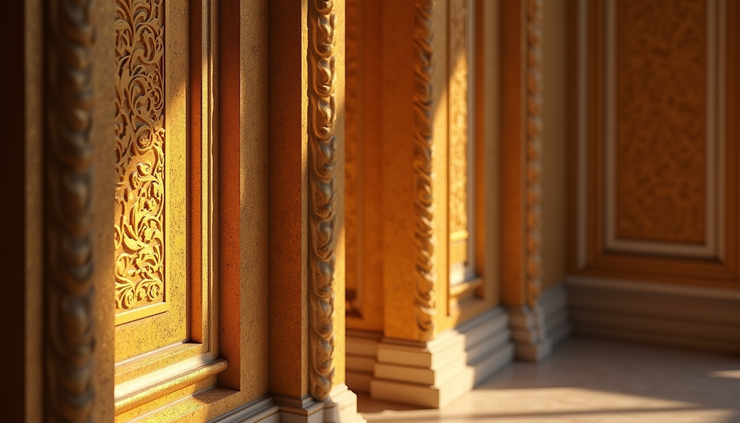
The Amber Room was created in the early 18th century in Prussia. King Frederick I commissioned German baroque sculptor Andreas Schlüter and Danish amber craftsman Gottfried Wolfram to design a room covered entirely in amber. The panels were set into the walls, framed by gold leaf and mirrors, creating a dazzling effect that changed with the light.
In 1716, the room was gifted to Peter the Great of Russia, symbolizing the alliance between Prussia and Russia. It was installed in the Catherine Palace near St. Petersburg, where it became a symbol of imperial wealth and artistic achievement. Visitors marveled at the room’s glowing amber walls, which seemed to capture sunlight even on cloudy days.
The Amber Room During World War II
The fate of the Amber Room changed dramatically during World War II. In 1941, Nazi Germany invaded the Soviet Union and captured the Catherine Palace. The Nazis dismantled the Amber Room and transported it to Königsberg (now Kaliningrad), where it was displayed in a museum.
As the war progressed, Königsberg became a target for Allied bombings. In 1944, the city suffered heavy damage, and the Amber Room disappeared amid the chaos. The exact circumstances of its loss remain unclear. Some believe it was destroyed in the bombings, while others think it was hidden or stolen by the Nazis.
Theories About the Amber Room’s Disappearance
Several theories try to explain what happened to the Amber Room after 1944:
Destroyed in Bombing: The most straightforward theory is that the Amber Room was lost in the fire and destruction caused by Allied air raids on Königsberg. However, no definitive evidence confirms this.
Hidden by Nazis: Some historians suggest that the Nazis hid the Amber Room in a secret location to protect it from destruction or theft. Possible hiding places include underground bunkers, mines, or castles in Germany or Poland.
Stolen and Sold: Another theory claims that the Amber Room was stolen by individuals or groups and sold on the black market. This theory is supported by occasional reports of amber artifacts resembling parts of the room appearing in private collections.
Recovered and Lost Again: Some believe the room was recovered by the Soviets after the war but was lost or hidden again due to political reasons or poor record-keeping.
Despite numerous searches and investigations, none of these theories have been conclusively proven.

The Amber Room’s Reconstruction and Legacy
In the 1970s, the Soviet Union decided to rebuild the Amber Room as a symbol of cultural restoration. The reconstruction took over 20 years and involved artisans from Russia, Germany, and other countries. Using old photographs, descriptions, and surviving sketches, they recreated the room with painstaking detail.
The new Amber Room was completed in 2003 and installed in the Catherine Palace. It serves as a reminder of the original masterpiece and the mystery surrounding its disappearance. The reconstruction attracts thousands of visitors each year, eager to see the glowing amber walls and imagine the lost original.
Why the Amber Room Still Captivates People
The Amber Room’s story combines art, history, war, and mystery. It represents:
Artistic Mastery: The room is a rare example of baroque craftsmanship using amber, a material difficult to work with and highly prized.
Historical Drama: Its disappearance during World War II reflects the chaos and destruction of the era.
Enduring Mystery: The unanswered question of its fate invites curiosity, treasure hunts, and speculation.
Cultural Symbol: The reconstruction shows how nations value their heritage and work to preserve or restore it.
What Can We Learn from the Amber Room?
The Amber Room teaches us about the fragility of cultural treasures during conflict. It highlights the importance of protecting art and history from destruction or theft. The ongoing search for the original room encourages cooperation among historians, archaeologists, and governments.
For those interested in history or art, the Amber Room story offers a fascinating case study of how beauty and mystery can survive through centuries, even when the original is lost.


Comments